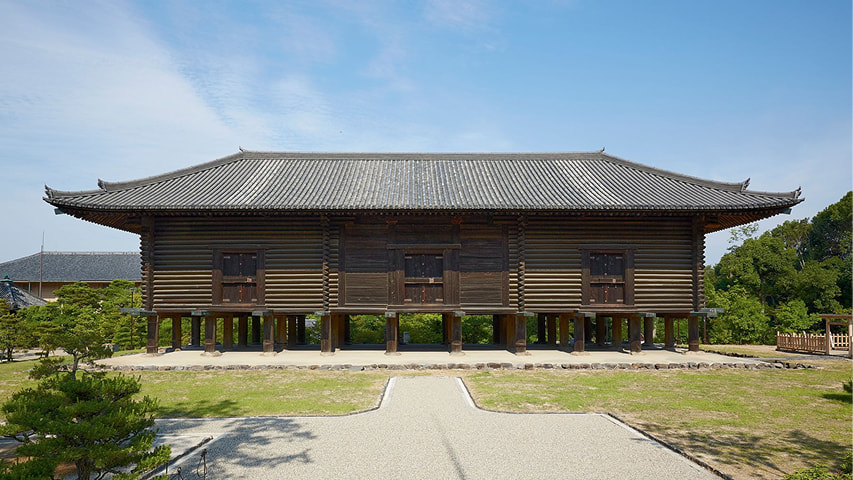

Shosoin
The Shosoin Repository is where precious artifacts are carefully looked after.
In ancient Japan (Nara period, 8th century AD), there were many buildings called "Shoso" where important items were kept. Areas with many Shoso were called "Shosoin." One of them, the Shosoin Shoso, has been around for nearly 1300 years. It is on the former grounds of Todai-ji Temple and is now looked after by the Imperial Household Agency. In 756, Empress Komyo offered the favorite belongings of her husband, Emperor Shomu to the Great Buddha of Todai-ji, and they were stored in this Shoso and passed down through history. This is the beginning of the story of "Shosoin Treasures". Equipment from Buddhist rituals and tools used at Todai-ji Temple were also kept there. There are about 9000 treasures from the Nara period even today. Currently, the treasures are not kept in the Shoso. Instead, they are in two new buildings called "West Repository" and "East Repository."
Let’s look at some of the treasures at the Shosoin.
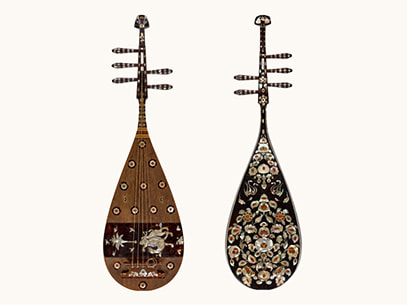
Five-string Biwa of red sandalwood with mother-of-pearl inlay (Raden Shitan no Gogen Biwa)
While most of the biwa (Japanese lutes) at Shosoin have four strings, this treasure has five strings and a straight neck. The five-string biwa was a musical instrument that was popular in ancient India. The only one left anywhere in the world is at the Shosoin. It is made from a rare southern wood called red sandalwood and is decorated with sparkling shells cut into patterns using a technique called "raden."
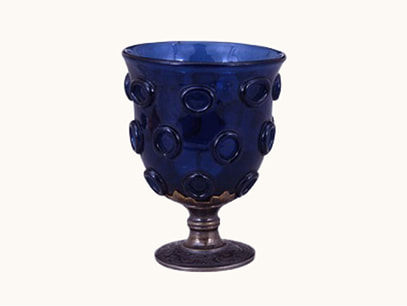
Glass Cup (Ruri no Tsuki)
This is a blue glass cup with round decorations. It has a silver stem, making it look like a wine glass. The glass part was made in ancient Persia, but the stem with dragon pattern is believed to have been made in China. This treasure symbolizes the cultural exchange along the Silk Road.
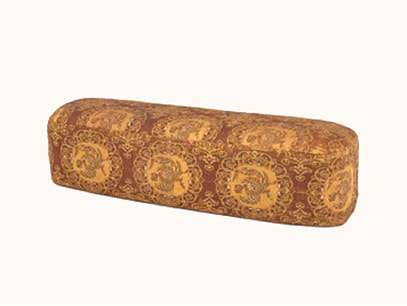
Armrest covered with Purple Silk Fabric with Phoenix (Murasakiji Otori-gata Nishiki no Onshoku)
This is an armrest used by Emperor Shomu. The design on the beautiful silk fabric is very international. It combines a grape arabesque pattern from Persia or Rome with a phoenix pattern from China.
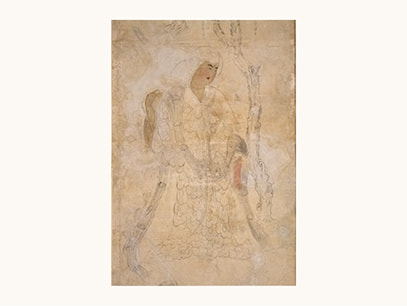
Screen with Lady decorated with Bird-feather (Torige Ritsujo no Byobu)
This is a folding screen with a beautiful woman standing under a tree. The name comes from the bird feathers attached to her clothing. Although the painting has a Chinese style, people later discovered that it was made in Japan because part of the original paper used for the painting was ancient documents from Nara period.
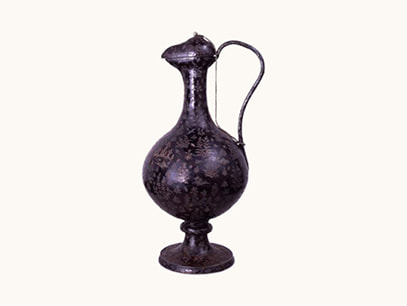
Persian-style Lacquered Jug (Shikkohei)
This is a lacquered water jug with a lid shaped like a bird's head. The shape comes from ancient Persia, while the technique of applying lacquer is from Japan, China, and other parts of Asia. This item shows that countries connected by the Silk Road were already interacting with each other 1,300 years ago.