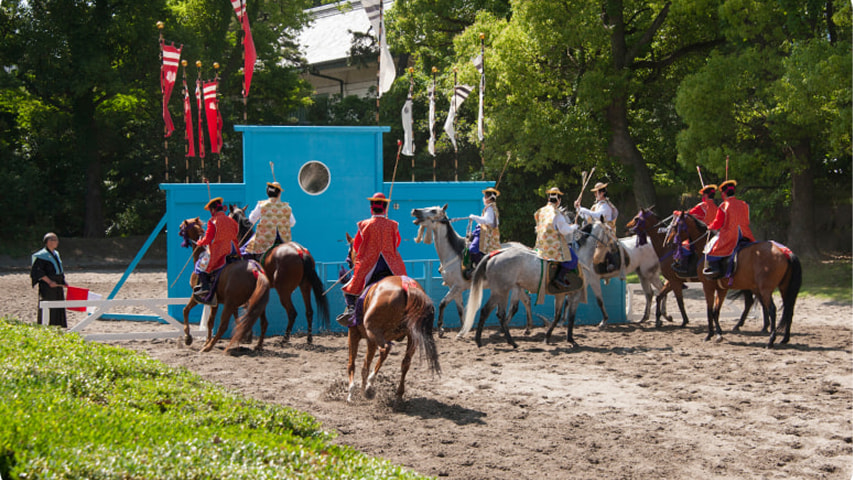

Traditional Horsemanship in Japan
Traditional horsemanship in Japan includes sports such as Dakyu (ancient Japanese polo) and Horohiki (pennants streaming).
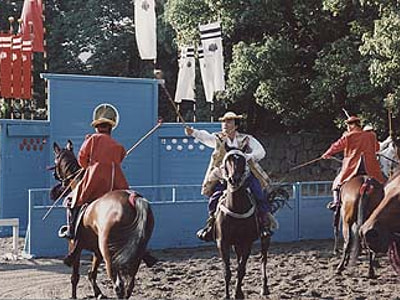
Dakyu is an ancient sport where players on horseback try to get a ball into a goal. It is said to have come to Japan from China about 1,200 years ago. At first, it was performed as a court ceremony during the Nara and Heian periods, especially during the Tango no Sekku (Boys’ Festival) in May. Later, in the Edo period, Tokugawa Yoshimune, the shogun, promoted Dakyu as a form of training for samurai, and it became very popular. Even today, the Imperial Household Agency continues to practice Dakyu according to the ancient rules.
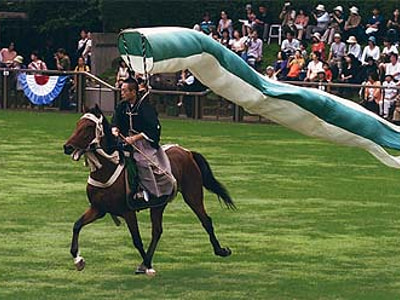
Horo was originally a piece of cloth used on the battlefield to protect against arrows, and samurai wore it for protection. Eventually, in the mid-Edo period, when there were fewer wars, people started using horo in artistic horse riding to represent beauty and tradition. Today, the Shumehan (Imperial Household Agency’s Horse Division) looks after this tradition and continues to practice it in the historical way.

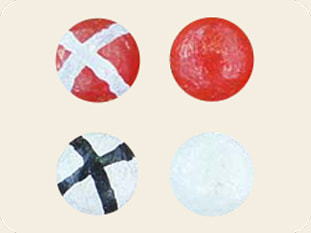
There are two types of balls used in Dakyu: Hiradama (flat ball) and Agedama (raised ball). For the finals, the Agedama is marked with a cross.
By the way, there are two color patterns for horo. The green and white striped pattern represents "spring," while the red and white striped pattern represents "autumn."