Videos of the Imperial Family (VHS・DVD)
| VHS・DVD |
information |
 |
- Celebrating the 88th Birthday of Her Majesty the Emperor Emeritus(2022, DVD, 60 min)
-
This video shows the life of Her Majesty the Empress Emerita, from Her marriage to His Majesty the Emperor Emeritus to this day, and how She has supported His Majesty at His side over the years. Through many episodes, it hopes to shed light on Her character and Her thoughts for the general public.
Please go to the Japanese Government Internet TV website (this video can be seen there). (Opens in a new window.)
|
 |
- Celebrating the 88th Birthday of His Majesty the Emperor Emeritus—Looking Back on the Heisei Era (2021, DVD, 60 min)
-
This DVD shows how His Majesty the Emperor Emeritus sought to fulfill the role of the Symbol of the State through His activities over the thirty years of the Heisei era as He walked together with the people of Japan.
Please go to the Japanese Government Internet TV website (this video can be seen there). (Opens in a new window.)
|
 |
- Their Majesties the Emperor and Empress – Reiwa – (2019, DVD, 56 min)
-
This DVD introduces various activities of Their Majesties the Emperor and Empress in the first year of the new Era of Reiwa. The DVD shows Ceremonies and Rites related to the Accession to the Throne.
Please go to the Japanese Government Internet TV website (this video can be seen there). (Opens in a new window.)
|
 |
- A Year in the Lives of Their Majesties – Ahead of His Majesty’s Abdication – (2018, DVD, 60 min)
-
This DVD introduces recent images of Their Majesties the Emperor and Empress as They fulfill Their various official duties as well as some of Their private moments.
Please go to the Japanese Government Internet TV website (this video can be seen there). (Opens in a new window.)
|
 |
- Their Majesties the Emperor and Empress—Extending a Caring Hand to People with Disabilities (2016, DVD, 53 min)
-
This DVD introduces images of Their Majesties the Emperor and Empress showing Their concern for the welfare of persons with disabilities from when They were Their Imperial Highnesses the Crown Prince and Crown Princess.
Please go to the Japanese Government Internet TV website (this video can be seen there). (Opens in a new window.)
|
 |
- The 80th Birthday of Her Majesty the Empress (2014, DVD, 60 min)
-
This DVD is a record of the 80 years of Her Majesty’s life
In addition to the standard version, this DVD features Japanese subtitles and an English-narrated version.
Please go to the Japanese Government Internet TV website (this video can be seen there). (Opens in a new window.)
|
 |
- Imperial Sericulture of Her Majesty the Empress (2013, DVD, 30 min)
-
Her Majesty the Empress has inherited from Empress Kojun, the Empress of Emperor Showa, the tradition of raising silkworms started by Empress Dowager Shoken, the Empress of Emperor Meiji, in 1871. Every year in the spring or early summer, Her Majesty takes time out of Her official duties many times to go to the Momijiyama Imperial Cocoonery or the Mulberry Grove in the Imperial Palace Grounds to participate in nearly all aspects of the silkworm raising process. This DVD shows Her Majesty’s sericulture, together with how the silk thread from a purely domestic silkworm, the koishimaru, now only cultivated at the Imperial Cocoonery, was used to restore the ancient textiles from the 8th century kept in the Shosoin Repository, and the history of sericulture in modern Japan.
In addition to the standard version, this DVD features Japanese subtitles, an English-narrated version and an French-narrated version.
Please go to the Japanese Government Internet TV website (this video can be seen there). (Opens in a new window.)
|
 |
- His Majesty the Emperor’s 80th Birthday (2013, DVD, 60 min)
-
This DVD is a record of the 80 years of His Majesty’s life in six sections entitled, respectively, “Events in His Majesty’s Life before His Accession to the Throne”, “The duties of His Majesty, as a symbol”, “Together with the people”, “The repose of souls and peace”, “International goodwill”, and “Daily ritual ceremonies at the Imperial Palace”.
In addition to the standard version, this DVD features Japanese subtitles and an English-narrated version.
Please go to the Japanese Government Internet TV website (this video can be seen there). (Opens in a new window.)
|
 |
- Visits by Their Majesties The Emperor and Empress to Disaster-affected Regions – Extending Their Thoughts to the People of Japan – (2012, DVD, 59 min)
-
This DVD introduces the many activities of Their Majesties The Emperor and Empress since His Majesty’s Accession to the Throne and how Their Majesties have continued to visit disaster-affected regions, providing much comfort and encouragement to the people affected by the disaster
and express Their appreciation to those involved in disaster recovery efforts.
In addition to the standard version, this DVD features Japanese subtitles and an English-narrated version.
Please go to the Japanese Government Internet TV website (this video can be seen there). (Opens in a new window.)
|
 |
- The Journey of Their Majesties The Emperor and Empress of Japan to Foster International Goodwill – Deepening friendship with the people of the world – (2011, DVD, 50 min)
-
This DVD presents, in an easy-to-understand format, the various activities those Their Majesties the Emperor and Empress have engaged in to foster international goodwill, from the time when they were Crown Prince and Princess through to His Majesty’s accession to the throne and up to the present day. The DVD includes images of Their Majesties’ actual activities and statements made at press conferences, relating to exchange with members of royal families, heads of State and senior government officials, their thoughts for people of Japanese descent, and prayers for global peace.
In addition to the standard version, this DVD features Japanese subtitles and an English-narrated version.
Please go to the Japanese Government Internet TV website (this video can be seen there). (Opens in a new window.)
|
|
- Their Majesties The Emperor and The Empress – Official Duties at the Imperial Palace – (2010, DVD, 28 min)
-
This DVD presents a compendium of ceremonies and functions held within the Imperial Palace, from amongst the official duties of Their Majesties the Emperor and Empress.
In addition to the standard version, this DVD features Japanese subtitles and an English-narrated version.
Please go to the Japanese Government Internet TV website (this video can be seen there). (Opens in a new window.)
|
|
- Press Conference by Their Majesties The Emperor and Empress of Japan in Commemoration of the 20th Anniversary of His Majesty’s Accession to the Throne (2009, DVD, 43 min)
-
In 2009 His Majesty the Emperor celebrated the 20th anniversary of his Accession to the Throne and on November 6, 2009, His Majesty held a press conference, accompanied by Her Majesty the Empress. This DVD contains a full record of this press conference, accompanied by various images.
In addition to the standard version, this DVD features Japanese and English subtitles.
Please go to the Japanese Government Internet TV website (this video can be seen there). (Opens in a new window.)
|
 |
- Their Majesties The Emperor and Empress – Together with the People – (2008, DVD, 34 min)
-
This DVD presents a compendium of ceremonies and events staged within the Imperial Palace, official visits within Japan and public activities for fostering good international relations by Their Majesties the Emperor and Empress. Besides the normal format, it is also available in versions with sign language and subtitles.
|
 |
- First 10 Years from Accession – Special Press Conference with Their Majesties The Emperor and Empress – Entire Press Conference – (1999, VHS, 40 min)
-
This video captures from various angles the special press conference given by Their Majesties the Emperor and Empress on November 10, 1999 as His Majesty the Emperor feted his 10th year on the throne. The press conference took place in the Shakkyo-no-Ma of the Imperial Palace.
|
 |
- Their Majesties The Emperor and Empress – Caring about Public Welfare – (2000, VHS, 25 min)
-
This video shows the public welfare activities of Their Majesties the Emperor and Empress from their days as Crown Prince and Princess to today.
|
 |
- Activities of the Imperial Family I – Their Imperial Highnesses The Crown Prince and Princess, Their Imperial Highnesses Prince and Princess Akishino and Her Imperial Highness Princess Sayako (2002, VHS, 27 min)
-
This video introduces Their Imperial Highnesses the Crown Prince and Princess, Their Imperial Highnesses Prince and Princess Akishino and Her Imperial Highness Princess Sayako as they support the activities of Their Majesties the Emperor and Empress.
|
 |
- Activities of the Imperial Family II – Their Imperial Highnesses Prince and Princess Hitachi, Her Imperial Highness Princess Takamatsu, Their Imperial Highnesses Prince and Princess Mikasa, Their Imperial Highnesses Prince and Princess Tomohito of Mikasa, His Imperial Highness Prince Katsura and Her Imperial Highness Princess Takamado (2003, VHS, 30 min)
-
This video introduces Their Imperial Highnesses Prince and Princess Hitachi, Her Imperial Highness Princess Takamatsu, Their Imperial Highnesses Prince and Princess Mikasa, Their Imperial Highnesses Prince and Princess Tomohito of Mikasa, His Imperial Highness Prince Katsura and Her Imperial Highness Princess Takamado as they support the activities of Their Majesties the Emperor and Empress.
|
 |
- Her Imperial Highness Princess Sayako’s Story (2005, VHS, 43 min)
-
This video tells the story of Her Imperial Highness Princess Sayako from her birth until her marriage to Mr. Yoshiki Kuroda.
|
 |
- His Majesty The Emperor – His Majesty Celebrates His 70th Birthday (2003, VHS・DVD, 40 min)
-
This film salutes His Majesty the Emperor on his 70th birthday, by chronicling his history and showing who he is. The film is divided into two parts lasting about 40 minutes total. Part 1 covers His Majesty the Emperor’s history from birth to his marriage to the Empress, with images of him studying as Crown Prince. Part 2 focuses on His Majesty the Emperor in his official duties after ascending to the throne.
|
 |
- Her Majesty Empress Michiko – At His Majesty’s Side – (2004, VHS・DVD, 43 min)
-
This film introduces Her Majesty Empress Michiko from her birth to her marriage to the Crown Prince, and shows her participation in official duties alongside her husband both as Crown Princess and Empress. It also presents how she raised a warm loving family and her efforts to pass down the traditions of the Imperial Family, including her involvement with children’s literature and music.
|
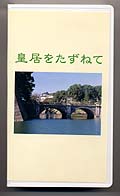 |
- Visit to the Imperial Palace (1997, VHS, 29 min)
-
This video introduces the natural environment of the Imperial Palace and culture of the Imperial Family, i.e., the East Gardens of the Imperial Palace, Gagaku (Japanese Imperial Court Music), Sannomaru Shozokan (the Museum of the Imperial Collections), etc.
|
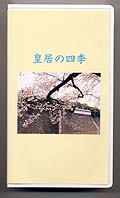 |
- Four Seasons at the Imperial Palace (1998, VHS, 30 min)
-
This video shows the changing seasons at the Imperial Palace.
|
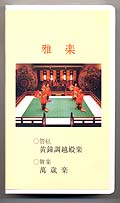 |
- Gagaku(Japanese Imperial Court Music) (1998, VHS, 37 min)
-
This video introduces “Ōshikichō-Etenraku” as an instrumental form of traditional music and “Manzairaku” as a traditional form of dancing to music.
- “Ōshikichō-Etenraku”
-
Some say the score was composed by Emperor Wen of Han (180~157B.C.) of China, while others claim it to be written in Japan, though its origin is not really known.
There are three songs of the same “Etenraku” title: hyō-jō, ōshiki-chō and banshiki-chō. It is said that hyō-jō was composed first, then transposed as banshiki-chō, and then later as ōshiki-chō, but each of the songs is completely different.
- “Manzairaku”
-
Legend has it that a phoenix appeared during the years of Tang (618 ~ 907) in China to offer its blessings to the emperor. This work transforms the voices into music and the motions into dance.
It has been performed since long ago for ascension ceremonies, banquets for celebrating appointments or promotions, etc.
There are four dancers on the left and right. They wear tori-kabuto headdresses and kasane-shōzoku costumes with their right shoulders exposed, and dance solemnly and gracefully.
|
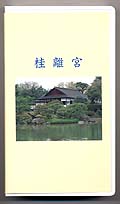 |
- Katsura Imperial Villa (1998, VHS, 30 min)
-
This detached villa was built by Prince Toshihito, the first to live there, from the Genna to the Kanei period (early 17th century). The Japanese garden is said to be of the finest beauty.
|
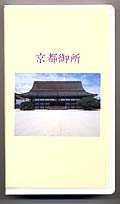 |
- Kyoto Gosho – Kyoto Imperial Palace (1999, VHS, 30 min)
-
This video introduces the Kyoto Imperial Palace.
- Kyoto Imperial Palace
-
Kyoto was the home to the emperors for 1,075 years, from when Emperor Kanmu relocated the capital there until the Imperial Family moved to Tokyo in the first year of the Meiji Era (1868).
The current Kyoto Imperial Palace was built in 1855 around the original private quarters of the emperor from long ago. At the center is the Shishinden with the Seiryoden to the northwest and Giyoden to the east. The garden on the south side (front) of Shishinden weaves through covered breezeways and gates including the Nikkamon gate, Gekkamon gate and Jomeimon gate.
|
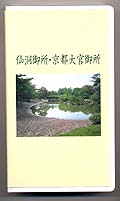 |
- Sento Imperial Palace and Kyoto Omiya Imperial Palace (1999, VHS, 30 min)
-
This video introduces the Sento Imperial Palace and Kyoto Omiya Imperial Palace.
- Sento Imperial Palace
-
This palace was built in the early 17th century when Emperor Gomizuno-o abdicated the throne. The palace burned down during the Ansei period (mid 19th century). Today, only the gardens and teahouses remain of the original structure.
- Kyoto Omiya Imperial Palace
-
The palace was originally built by Emperor Gomizuno-o for Empress Tofukumon-in in the Kanei period (early 17th century). The current structure was built for Empress Dowager Eisho (the spouse of Emperor Komei) and was completed in 1867.
|
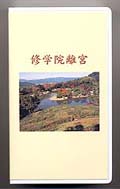 |
- Shugakuin Imperial Villa (2000, VHS, 30 min)
-
This detached villa was built for the retired Emperor Gomizuno-o in the Joo period (mid 17th century). The compound consists of three villas and a garden that incorporates the surrounding landscape into the design. It is one of the most famous gardens in Japan.
|
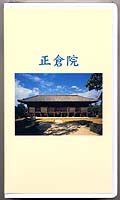 |
- Shosoin Repository (2001, VHS, 30 min)
-
This video introduces the treasures, history and architecture of this Imperial repository.
|
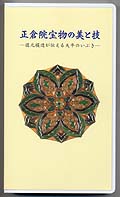 |
- Beauty and Artistry of Shosoin Treasures – The Inner Workings of the Tempyo Era Seen through Restored Works – (2002, VHS, 30 min)
-
This video introduces the treasures of the Shosoin Repository that have survived until today gracious of restoration work.
|
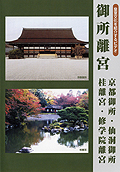 |
- Japan’s Imperial Palaces – Kyoto Imperial Palace, Sento Imperial Palace, Katsura Imperial Villa and Shugakuin Imperial Villa (2004, DVD, 120 min)
-
This DVD was edited from videos on the Kyoto Imperial Palace, Sento Imperial Palace, Katsura Imperial Villa and Shugakuin Imperial Villa, over a period from 1999 to 2001.
|
 The Imperial Household Agency