The Kyoto Omiya Imperial Palace/The Sento Imperial Palace
| Photo |
Description |
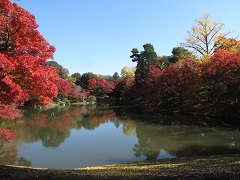 |
- Kitaike Pond
- The Kitaike Pond (North Pond) initially was the garden of the Omiya Imperial Palace. A crossing canal, constructed in the early 18th century, connects the North and South Ponds.
|
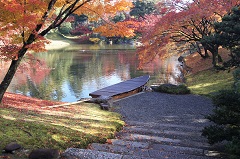 |
- The Landing Place on the North Pond
|
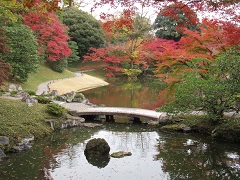 |
- Akosegafuchi, Rokumaibashi Bridge
- Rokumaibashi, which refers to the bridge of six flat cut stones, crosses over Akosegafuchi pool.
|
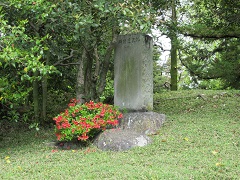 |
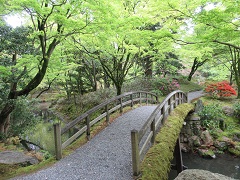
- Stone Monument of Kinotsurayuki
- The monument was built in 1875. This is the site where the residence of the prominent poet Kinotsurayuki once stood.
|
 |
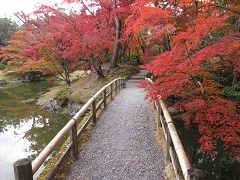
- Tsukabashi Bridge
|
 |
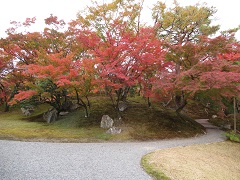
- Momijibashi Bridge
- The Momijibashi Bridge (Maple Tree Bridge)is the earthen bridge that crosses over the canal and connects the North and South Ponds.
|
 |
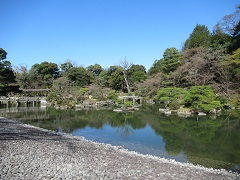
- Momijiyama Maple Hillock
|
 |
- Minamiike Pond
- The Minamiike Pond (South Pond) contains various elements such as a waterfall, islets, bridges, and Suhama (South Pond Shore),which offer highly picturesque scenery in a tranquil atmosphere.
|
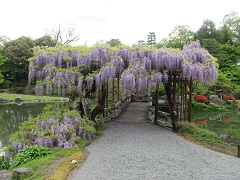 |
- Yatsuhashi Bridge
- The path crosses the South Pond via this the Yatsuhashi Bridge (zigzag bridge) covered by a wisteria trellis.
|
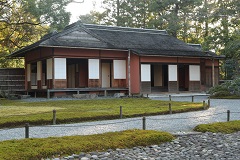 |
- Seikatei
- The Seikatei is a shingle-roofed tea pavilion situated in the south end of the South Pond. The name of “Seikatei” is derived from a poem written by a Chinese prominent poet, Li Bo of Tang dynasty.
|
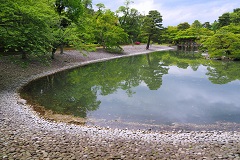 |
- Suhama Shore
- Suhama is the South Pond shore which consists of a pebbled beach created from stones nearly identical in size and shape (flat and oval stones). The flat pebble is called “Isshouseki” because it is said that each pebble was exchanged with one sho (about 1.8 litres) rice.
|
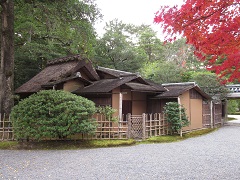 |
- Yushintei
- The Yushintei is the tea pavilion brought from the former residence of the Konoe family in 1884 to replace the pavilion “Shishisai” which was lost to fire. The Sotokoshikake outdoor arbor bench used as a waiting place for tea ceremony gathering is located outside of the Chumon Gate.
The pavilion is scheduled to be repaired from October 2022 to March 2023. During the period, the whole pavilion is covered in scaffolding. We are sorry for the inconvenience.
https://sankan.kunaicho.go.jp/info/pdf/yushinteichumon-kouji.pdf(Open this content in a new window)
|
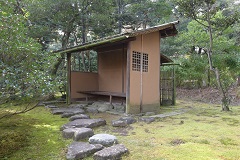 |
- Sotokoshikake Outdoor Bench
- The Sotokoshikake Outdoor Bench was repaired. This was to repair the deteriorated parts of the shingled roof. The work was completed in March 2022.
https://sankan.kunaicho.go.jp/info/pdf/yushinteisotokoshikake-kouji.pdf(Open this content in a new window)
|
 Learn about the Imperial Family