The Kyoto Imperial Palace (Kyoto Gosho)
| Photo |
Description |
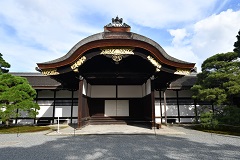 |
- Okurumayose
- This was the carriage porch used for the official visits by high ranking court nobles who had been granted permissions to enter the Palace.
|
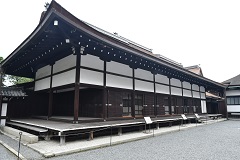 |
- Shodaibunoma
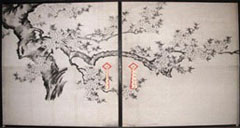
- This was used as waiting rooms for high ranking court nobles . They were ushered into three different waiting rooms according to their ranks. In descending order of importance, there are “Room of Tigers”, “Room of Cranes”, and “Room of Cherry Blossoms”, named after the paintings that adorn the sliding doors of each of the rooms.
|
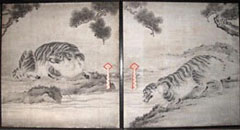 |
- Room of Tigers
|
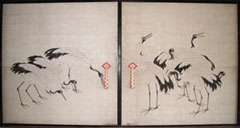 |
- Room of Cranes
|
 |
- Room of Cherry Blossoms
|
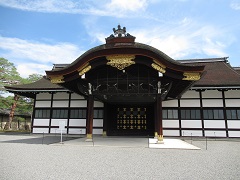 |
- Shinmikurumayose
- This was built as the new carriage porch on the occasion of the enthronement ceremony of Emperor Taisho in 1915.
|
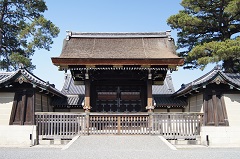 |
- Kenreimon Gate
- The Kenreimon Gate, the main gate of the Kyoto Imperial Palace, was originally for the sole use of the Emperor, but in recent years, it has also been opened for foreign monarchs and presidents on the state visit to Japan.
|
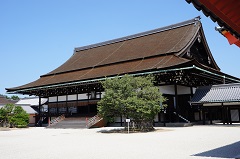 |
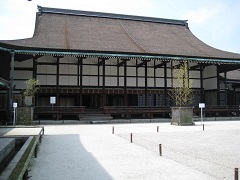
- Shishinden
- The Shishinden is the most important building on the Palace grounds and was used for important ceremonies such as enthronement ceremonies. It was built in the Imperial Palace style with high flooring and its distinctive roof in Irimoya (hipped and gabled roof) style, made of layers of cypress bark. Inside are the Imperial Thrones called“Takamikura”, and the August Seat of the Empress called “Michodai”,which were built in the ancient traditional style for the enthronement ceremony of Emperor Taisho in 1915. Both Thrones were used at the Tokyo Imperial Palace for the enthronement ceremony of His Majesty the Emperor.
- In front of the building is a large open courtyard covered with white gravels, which is called Dantei (South Courtyard). Viewed from the vantage of the throne, its central staircase is flanked to the left by the cherry blossom tree named “Sakon-no-sakura (Left cherry tree)” and to the right by the mandarin orange tree named “Ukon-no-tachibana (Right mandarin orange tree)”
|
 |
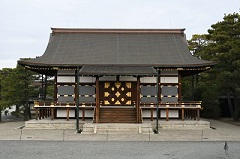
- Seiryoden
- The Seiryoden was built with the roof in Irimoya (hipped and gabled roof) style, made of layers of cypress bark, and was revived in the original style of the Emperor’s living quarters in the Heian Period. In the center is an Imperial Throne called “Michodai”, on which the Emperor reposed himeself. In front of “Michodai” is a tatami-matted seat called “Hi-no-omashi” which was used for the seat for the Emperor during daytime.
- The Seiryoden building was repaired. This was to repair the deteriorated portions of the cypress bark roof, the plastered wall, and the furnishings.
The work was completed in March 2022.
-
https://sankan.kunaicho.go.jp/info/pdf/seiryoden-kouji.pdf(Open this content in a new window)
|
 |
- Shunkouden
- The Shunkouden was constructed on the occasion of the enthronement ceremony of Emperor Taisho in 1915, which was held at the Kyoto Imperial Palace. One of the Imperial Regalia “Divine Mirror” was brought back from the Imperial Sanctuary of Tokyo Imperial Palace and was enshrined here temporarily.
|
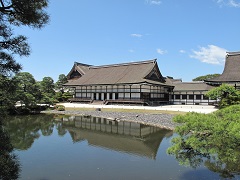 |
- Kogosho
- The Kogosho was built in the mixture style of the Shinden-zukuri style and the Shoin-zukuri style. It was used as a ceremonial hall, as well as an audience chamber when the Emperor met Shogun (military rulers of feudal times) and daimyo (feudal lords). On the night of December 9th in 1867, following the Declaration of the Restoration of Imperial Rules, the Kogosho Conference was held here. The present building was reconstructed in 1958.
|
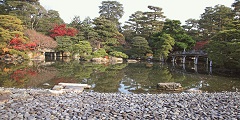 |
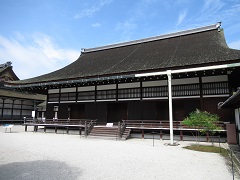
- Oikeniwa Garden
- The Oikeniwa Garden features a large pond with its strolling pathway around the pond. The foreground shore called Suhama is covered with pebbled stones and a path of large stepping stones leads down to the water’s edge. Various elements, the Keyakibashi Bridge, arrangements of stones, and numerous plants and trees planted on the shore, offer the variety of scenery of the garden.
|
 |
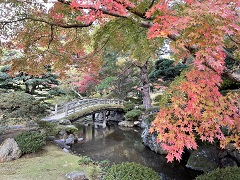
- Ogakumonjo
- The Ogakumonjo was built in the Shoin-zukuri style with the roof in Irimoya (hipped and gabled roof) style, made of layers of cypress bark. This palace was used for the academic events such as Waka poetry recitals and occasionally as an audience chamber.
|
 |
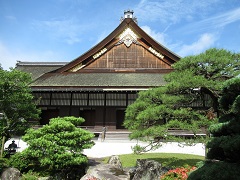
- Gonaitei Garden
- The Gonaitei Garden (Inner Garden) is the Emperor’s private garden which was exquisitely designed with the meandering stream spanned by earthen and wooden bridges and the tea pavilion “Kintai” situated at the back of the garden.
|
 |
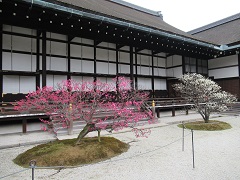
- Otsunegoten
- The Otsunegoten is the largest building on the Palace grounds. It was built in the Shoin style with the roof in Irimoya (hipped and gabled roof) style, made of layers of cypress bark and was used as the Emperor’s living quarters after the 16th century, in place of the Seiryoden Palace.
|
 |
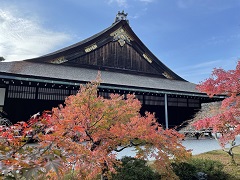
- Jodan-no-ma (Upper Room), Chudan-no-ma (Middle Room), Gedan-no-ma (Lower Room) and Kenji-no-ma (Treasure Room) of the Otsunegoten
- The Jodan-no-ma Room, the Chudan-no-ma Room and the Gedan-no-ma Room were used on the occasion when the Emperors met their guests unofficially. The Kenji-no-ma Room was used as the treasure room to store the Imperial Regalia, “the Sacred Sword” and “the Sacred Jade”.
|
 |
- Kogogu Tsunegoten
- The Kogogu Tsunegoten was built as the living quarters for the Empresses and other court ladies.
|
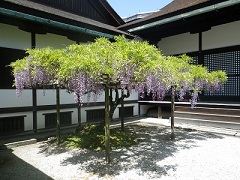 |
- Higyosha
- The Nyogojudai bridal ceremony was held here. This palace was built in the architectural style of the Heian Period as the living quarters for court ladies. This building is also known as Fujitsubo, named after wisteria flowers (fuji) planted in the inner courtyard.
|
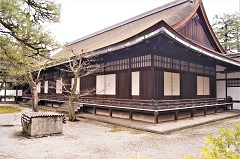 |
- Wakamiya Himemiya Goten
- The Wakamiya Himemiya Goten was built as the living quarters for princes and princesses, where the Emperor Meiji resided in his childhood.
|
 Learn about the Imperial Family